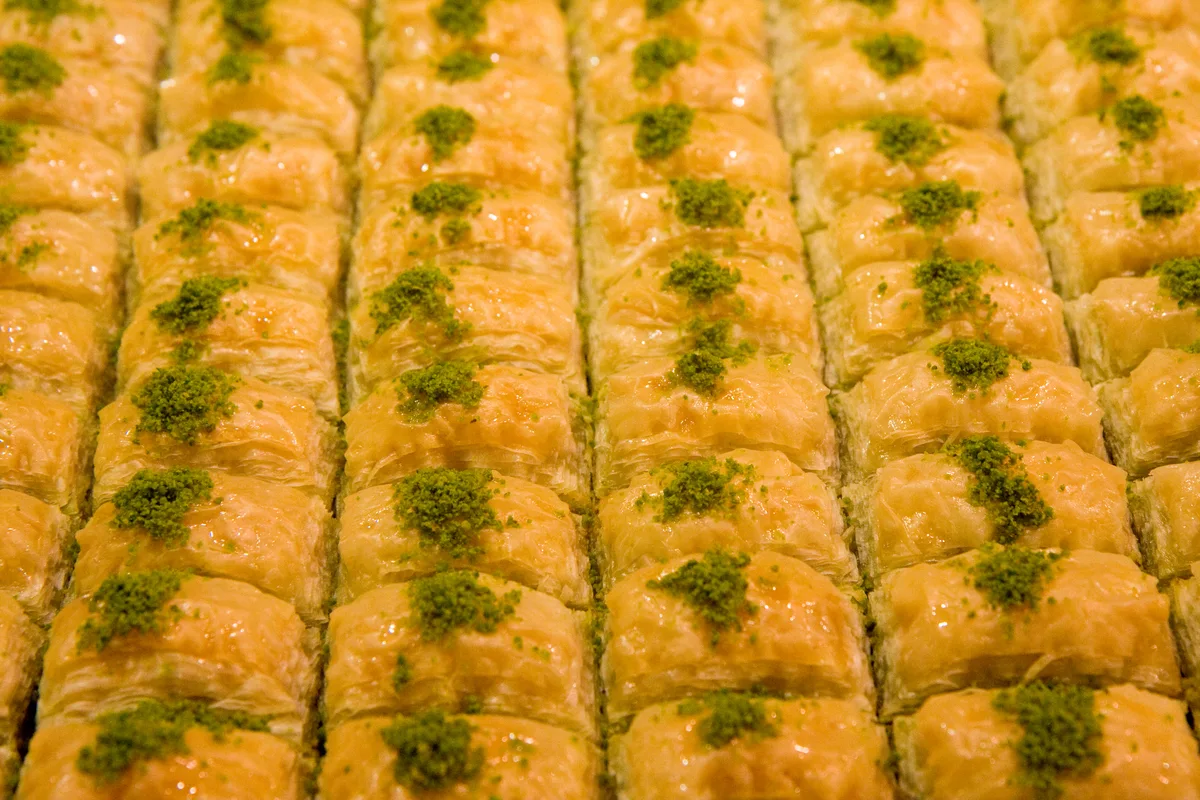

Baklava recipes vary by region and household. The nuts, spices and syrup can change the flavor considerably, even when the finished pastries look similar.
Baklava in Ottoman kitchens
Writing for Smithsonian, John Moretti traces modern baklava through Ottoman culinary culture. He cites food historian Mary Işın, who identifies a reference to the pastry in early-fifteenth-century poetry by Kaygusuz Abdal. Expensive ingredients and the work of making fine pastry helped make baklava a food for celebrations. The reference establishes that baklava was known then; it doesn’t identify a single inventor. Read Moretti’s history at Smithsonian.
Nuts, spices and syrup
Moretti describes pistachio baklava in Gaziantep, walnut-and-cinnamon versions in Greece, and Armenian paklava with walnuts, cinnamon and cloves. Cypriot versions can include almonds and walnuts. Syrups vary too, using honey, citrus or floral flavors. These examples describe regional traditions, with further variation between bakers and households. Source: Smithsonian.
Gaziantep baklava
The EU specification for Antep Baklavası, also called Gaziantep Baklavası, describes fine pastry, Antep pistachios, plain butter and sugar syrup. The fresh version includes semolina cream; the dry version leaves it out. Honey is excluded from this specification, so a walnut-and-honey recipe is a different style of baklava. Source: EU specification 52013XC0808(05), sections 3.2–3.3.
Preparation, assembly and baking take place in Gaziantep province. The specification also records the pastry’s nineteenth-century regional reputation and producer families working across generations. It documents the ingredients and methods of this named regional product, rather than setting a recipe for baklava everywhere. See sections 3.5 and 5.3.
Comparing recipes
The filling is a good place to start, but also look at the thickness of the pastry and what goes into the syrup. A recipe with honey and cinnamon will differ from one with pistachios and sugar syrup. Ask the baker which version they make.
To try a walnut-and-honey version, see our baklava recipe.